
In addition to reading the article, you’re also welcome to watch the video or listen to the audio version — whichever helps you absorb the material more fully.
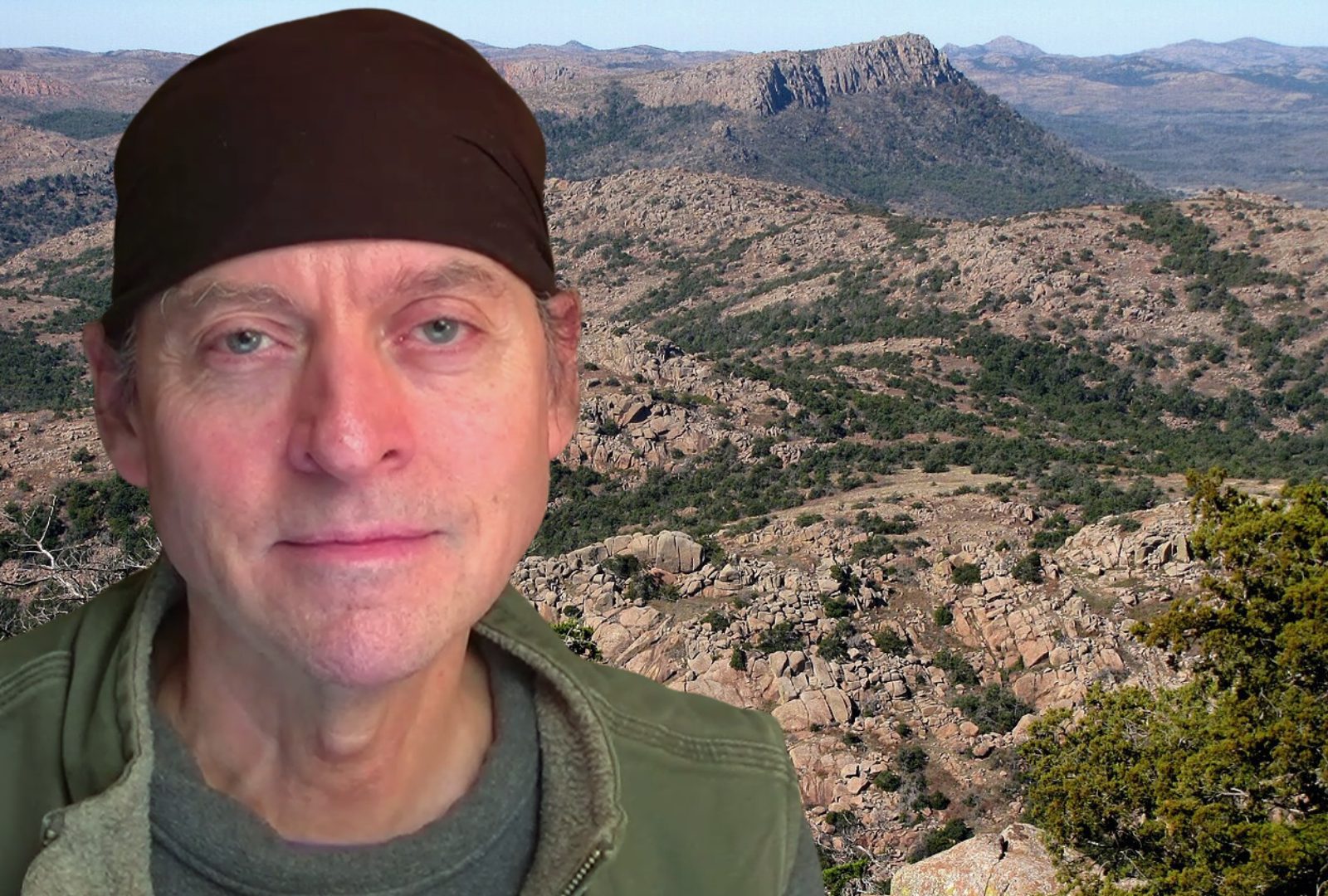
While most of you will likely never go on the vision quest, some of you may. I have guided a few people through it over the years, so it remains a possibility. Either way, it’s something worth speaking about, not only as a potential path, but also to offer insight into Native American healing practices, and so you have a clearer understanding of the process I facilitate and how it fits into both my one-on-one work and the broader message I’m sharing with the world.
I spent much of my teens somewhat isolated in Southeast Texas. I would often go to the Stephen F. Austin State University library and check out stacks of books on the various Native American tribes and read them one by one. I’m not sure when I first heard about the vision quest, but I do remember that at the age of fourteen, as I was reading the account of the Lakota doctor Black Elk, thinking that if I were ever given the opportunity, this is what I would do with my life.
At seventeen, I had left on my own and made it as far as southwestern Oklahoma, where I landed among a community of Kiowa Indians. I immediately immersed myself in the local Kiowa community and its traditions, spending lots of time at the powwows and sitting up all night in peyote meetings with the Native elders. It was in one of these meetings that I first met my mentor, Horace Daukei, one of the last surviving traditional Kiowa doctors.
Horace passed on portions of his own healing gifts to me, then had me go on the vision quest in order to earn the right to work with these gifts of healing. The vision quest typically involves fasting alone in the mountains for four days and nights without food or water.
The apprenticeship I went through with Horace was intense. Much of my time was spent assisting him while he was doctoring his patients.
Horace also wanted to see how determined I was to receive the power that Native people commonly refer to as medicine, and he was constantly testing me. Sometimes he would make the sweat lodge so excruciatingly hot it would have had other people begging him to open the door. At other times, he put me in situations where I had to rely on my instincts to survive, like when he dropped me off in the middle of the Hopi Indian Reservation with instructions to hitchhike to Las Vegas, Nevada and make the best of it.
In total, I spent three years apprenticing with Horace. I then re-enrolled in college and used the next two years to reassemble myself while completing a degree.
For much of my twenties, I felt like I was just getting my feet on the ground, lacking many essential resources and struggling at times, yet gradually building a practice. It was during that time that I found myself reenacting the traumas of my childhood and adolescence in my attempts to form intimate relationships.
Psychotherapy helped me to gain a cognitive understanding of why I was suffering so terribly. The intensive series of meditation practices I developed, and the sessions I did with a few gifted healers, helped me to begin the process of healing the trauma, attachment issues, and other deep emotional wounds I was carrying.
After I turned thirty, I found myself thinking about the how traditional Native American doctors possessed such extraordinarily powerful gifts of healing. I began to feel something welling up inside me, a desire, actually something pulling me back to the Wichita Mountains to go on the vision quest again.
Around that time, I reached out to several Native friends back in Oklahoma to ask if they would help me with the logistics of getting to the mountain. My friend Harry agreed, so I loaded up the car and headed back to Oklahoma.
I was woefully unprepared for my first vision quest in the Wichita Mountains. The wind shifted abruptly, while I was on the mountain blowing from the north. The temperature plummeted. My sleeping bag, being grossly inadequate, meant I froze my ass off. Fortunately, it didn’t rain or snow that time.
While I was on the mountain, I could feel the traumas of my childhood and adolescence surfacing. It felt like I was reliving them. In those moments, I could feel this extraordinarily powerful presence descending into my body, helping me to transform and then digest what I had been carrying.
There was a definite presence about me after I came off the mountain. Other people commented on it too. One friend was taken aback looking at me, saying there was a clarity in my eyes he had never seen before.
I was feeling the need to return to the Wichita Mountains again. Yet at the time, I waited nearly a year before going back for the next vision quest, having gotten the idea in my head that it was something I was meant to do once a year, even though it felt too long. Since that time, I’ve been returning to the Wichita Mountains for the vision quest in the spring and fall every year.
The conditions vary considerably every time I go. The wind primarily blows from the north or south and is often very strong and can switch abruptly. I’ve been on the mountain when it was unbearably hot, which can be especially difficult while fasting without water, and other times when the temperatures dropped down into the teens. I’ve endured one snowstorm where I was covered with six to eight inches of snow.
While I much prefer to sleep out in the open, I’ll take a tarp if rain is in the forecast, or even a tent if they’re expecting a torrential downpour. The storm that came through in late October of 2024 was so violent I didn’t know if the tent was going to make it. After the fourth night, I came down from the mountain at daybreak in the pouring rain.
Getting through the four days and nights can be especially difficult. Yet I’ve carried a great deal of trauma, and the reenactment of my attachment patterns in my twenties only deepened those wounds. I had a very deep hole to dig myself out of.
Every time I go on the vision quest, I can feel these forces, or beings, descending into my body. At times, it has felt like a near-death experience. As this happens, I’ve often found myself re-experiencing traumas and other adverse experiences from my past, current struggles I was facing, heartbreak, and other losses I had suffered. I could feel this presence helping me to transform and digest what I had gone through, and all the emotions tied to it.
Native Americans often spoke of how their doctors acquired the medicine they possessed, the special gifts or powers received during the vision quest that enabled them to facilitate healing and do other things that were considered extraordinary, and at times even miraculous. Many of these individuals possessed what we would now call paranormal abilities.
There are times when I’ve been on the vision quest when I felt a very specific presence descend into my body. I would be having visionary experiences as that happened. Later on, after coming down from the mountain, this same presence would at times show up to assist individuals I was working with who were dealing with certain health-related issues.
In the months preceding the vision quest, I can feel a heaviness from the stresses I’m dealing with at the time. Each time I go through it, I feel a sense of having let go of much of what I had been carrying. I often think to myself, “Wow, I really needed that.” There’s a definite sense of being lighter and more capable, as I find I have access to greater internal resources.
For quite some time, I found myself forming attachments to women who were unavailable, disinterested, and a few who were quite abusive. My inner models of attachment were all screwed up. Many times when I’ve gone on the vision quest, I would be digesting my lived experiences of loss, or whatever I was going through in relationships. Over all these times, I have been able to feel a new foundation taking shape. As that’s happened, the quality of my relationships has continued to improve. Going through the vision quest has done more than anything else to heal these parts of me.
What one experiences during the vision quest is so unique to each individual. Going through the vision quest all these times has played a huge part in healing my childhood and adolescent trauma, attachment wounds, loss, and so many other things I’ve gone through in my relationships and in other areas of my life. Were you to go through the vision quest, your experience may be completely different.
We all go through a lot in our lives. We’re facing all kinds of challenges, stressful situations, hardships, losses, and adversity. So much of that accumulates in our bodies, along with the emotions we’re not able to process. As those emotions backlog inside of us, we become very stagnant. For many, it slows, if not completely stops, healing and growth. One of the things I fear most is stagnation. And I greatly appreciate that going through the vision quest helps me to keep digesting and cycling through whatever I’m dealing with in life, so I continue to heal and grow.
Going through the vision quest can be extraordinarily difficult at times. It’s not something I usually recommend to others, but a small percentage of the people I’ve worked with over the years have gone, and it’s turned out to be a very good thing for them, helping them to heal and grow. You can reach out to me if that’s something you feel called to do.
Trained by a traditional Native American doctor and having gone through so many vision quests, I work as a conduit, allowing an extraordinarily powerful presence to work through me to facilitate healing in the bodies and minds of others, as Indigenous healers have done for thousands of years. Even for those who don’t go on the vision quest, people I work with experience healing and growth through the individual sessions I facilitate, comparable to what they would experience if they were to go.
©Copyright 2026 Ben Oofana. All Rights Reserved.


Leave A Comment