

In addition to reading the article, you’re also welcome to watch the video or listen to the audio version — whichever helps you absorb the material more fully.
When I found myself reenacting the trauma of my childhood and adolescence in my attempts to form intimate relationships, psychotherapy helped me gain a cognitive understanding of my emotional wounding. Yet it wasn’t actually facilitating the healing of those wounds. I continued to reenact the same painful relational dynamics.
Instinctively, I knew to breathe from the depths of the emotions that arose in response to what was happening, but even that wasn’t enough. Determined to do whatever it took to heal, I began exploring any therapeutic interventions that held promise.
Of all the therapeutic interventions I’ve explored, the sessions I’ve done with gifted healers and the vision quest have been the most powerful. The problem is that at this time in history there are very few truly gifted healers. The last time I had the opportunity to work with one was in Sri Lanka with the Buddhist monk Gnanasumana Thero, back in April and again in August of 2007. I haven’t found anyone since.
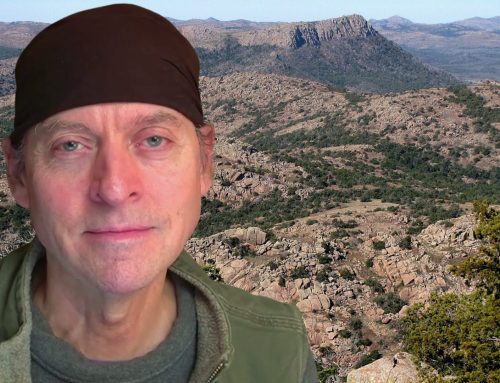
Since 1993, I’ve been returning to the Wichita Mountains in the spring and fall to go on the vision quest, a traditional Native American practice that involves fasting without food or water alone in the mountains for four days and nights. I don’t do any kind of therapy during the month after I come down from the mountain, because I’m still processing what unfolded during the quest.
But in the months between vision quests, there are times when I’m dealing with difficult or stressful people and situations, and I can feel the stress accumulating in my body. There have also been periods when I was going through a breakup, being ghosted, or dealing with some other kind of painful relational drama.
Even though I do a great deal of intensive meditation and chi gong practice, I can at times feel the stresses and unprocessed emotions accumulating in my body. A lot of it shows up in my upper back, neck, and shoulders, and at times it can be quite painful. So, whenever I can, I go for sessions of deep tissue bodywork.
One day, I was walking around the Flushing section of Queens, which is largely populated by Chinese, Korean, and other Asian communities. I wanted to find a legitimate bodyworker, but I was apprehensive because there’s a lot of prostitution around Main Street. Fortunately, I did find a place, and it turned out to be legitimate. That business eventually closed, but there was a sign on the door directing clients to another establishment.
The newer location had a number of practitioners, and after some time I ended up working with a bodyworker who has worked out very well for me. Sophia barely speaks any English, yet she is very strong and highly adept at what she does. There were several occasions when I had been injured during martial arts training, and with Sophia’s help I was able to accelerate the healing of those injuries.
I’m not sure how long I’ve been working with Sophia now, but there was a time over a decade ago when I was ghosted, and it triggered a great deal of grief. I went to see her repeatedly in the weeks and months that followed, and it helped me move through the heartbreak much faster. Not long after, I returned to the Wichita Mountains for the next vision quest. By the time I came down from the mountain I had largely digested the loss and was moving on. In fact, I found myself feeling grateful that the relationship had ended when it did.
Deep tissue bodywork has many benefits. Many of us are so disconnected from our bodies, yet deep tissue bodywork helps us reconnect and become more grounded in them.
While technology has provided us with many benefits, the unfortunate downside is that many of us are more disconnected than ever before. We’re more isolated and, in many cases, touch starved. That lack of physical contact reinforces our disconnection, not only from ourselves but from other people. Deep tissue bodywork helps compensate for the touch starvation so many of us are experiencing.
It also frees up stagnant emotions. While some people may feel flooded, overwhelmed, or resist the process, I welcome it. I find it very helpful to have these emotions brought to the surface. When I’m able to access them, I make a concerted effort to be fully present to what is surfacing, immersing my awareness in the depths of what I’m feeling while breathing softly and deeply. By doing this, I can move through grief, frustration, disappointment and other distressing emotions that arise in response to difficult people and situations. This helps me stay more fluid and adaptive and makes it easier for me to cope with whatever I’m facing.
People reach out to me from across the United States, Canada, and around the world. At times it has genuinely pained me that I wasn’t able to be there in person to assist them. In most instances, I don’t know of other gifted healers I can recommend. So, I often find myself asking, what resources or therapeutic interventions can I suggest that might truly help them?
One of the fortunate things about deep tissue bodywork is that it is widely available. You can find skilled practitioners in every major city, and even in many small towns and rural communities, both across the country and in other parts of the world.
When people reach out to me, I usually ask where they live. If they’re in the same geographic area, I’ll work with them in person. Many who live at a distance choose to work with me by phone. Yet I also want them working directly with their bodies, which is why I often encourage deep tissue bodywork.
Even when I do have the opportunity to work with people in person, I’ll often suggest they do sessions of deep tissue bodywork beforehand. Breaking down the muscular body armor and opening the body makes them far more receptive to the individual sessions I facilitate.
Deep tissue bodywork offers a number of tangible health benefits. It helps relieve chronic muscular tension, improve circulation, and support the body’s inherent capacity to heal. By working directly in the areas where stress, unprocessed emotional residue, and trauma are held, it can reduce pain, increase mobility, and restore greater coherence across multiple systems of the body. As tension patterns soften, breathing often deepens, digestion improves, and sleep becomes more restorative. While it’s not a cure-all, it can be a powerful support for both physical and emotional wellbeing.
For those dealing with heartbreak and other stressful or challenging life circumstances, sometimes healing begins not by thinking more, but by coming back into the body and allowing what’s there to move. Deep tissue bodywork can be a simple, accessible way to support this process.
©Copyright 2026 Ben Oofana. All Rights Reserved.



Leave A Comment