
For seventeen years, I trained with Shifu Li Tai Liang in Xin Yi Quan, Baguazhang, Tai Chi, and Chi Gong—internal martial arts rooted in Taoist lineages that go back thousands of years. I first began attending Shifu's classes in the Corona section of Queens. But I quickly realized that the depth and complexity of what he was teaching couldn’t be fully grasped in a group setting, so I began training with him individually.
At the time, Shifu lived in the town of Babylon, in Long Island, and whenever I was in the New York City area, I would usually make the long commute to train with him at least once a week. He eventually moved to the Little Neck section of Queens, and for three years, I lived part-time in a small apartment in a building he owned.
Lineages are an essential part of all the ancient spiritual disciplines I’m familiar with—among the Native Americans, the Hindu-Vedic traditions, as well as within Sufism, Buddhism, and Taoism. Shortly after I began training with Shifu, he performed a ceremony in which he initiated me into the lineage.
Initiation is an important aspect of training in these disciplines. It helps establish a connection with those who have attained mastery over the course of thousands of years. Even though these individuals are no longer present in the body, they continue to guide sincere students—helping them progress and attain higher levels of mastery.
In the seventeen years I spent training with Shifu, I doubt I missed more than ten scheduled sessions—if even that. There were times I had a physical injury, but I still showed up. On those days, we focused on Chi Gong or other forms of practice that wouldn’t aggravate the injury.
There were a few instances when I was so ill—like having the flu—or when I had an opportunity to work with someone and that was the only time they were available, that I had to reschedule my session with Shifu. Whenever that happened, I would call him directly, explain the situation, let him know I couldn’t make it on the scheduled day and time, and then tell him when I was available. We would reschedule right then over the phone. In doing so, I demonstrated respect and appreciation—for him as a person, for the time and energy he had invested in me, and for the value of what he was offering.
The Medicine Man's Apprentice
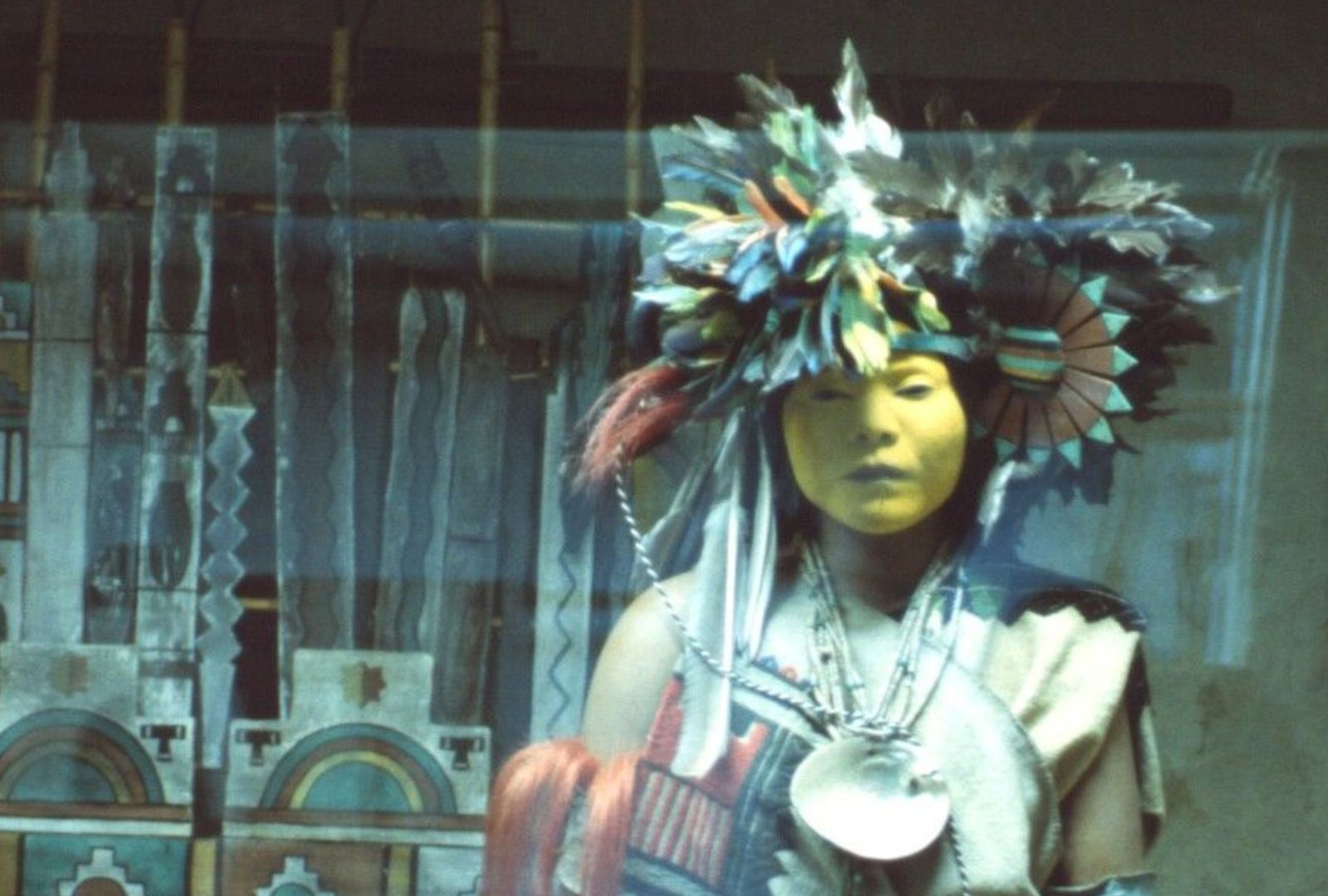
Going back in time—ever since early childhood—I was drawn to Native Americans. At fourteen, when I first learned about the traditional Native doctors—the medicine men and women—I thought to myself, if I’m ever given the opportunity, this is what I’m going to do with my life. I began saving money, and by the time I was seventeen, I left on my own and made it as far as Oklahoma, where I found myself among a community of Kiowa Indians. Not long after arriving, I began attending peyote meetings with the Native elders. It was during one of those meetings that I first met my mentor, Horace Daukei—one of the last surviving traditional doctors among the Kiowa Tribe.
Horace transmitted portions of his own healing gifts—commonly referred to as medicine. He then had me go on the vision quest, a traditional Native practice that involves fasting alone in the mountains for four days and nights without food or water, in order to earn the right to work with these gifts of healing.
Horace began to have me assist him in the work he did with his patients. In one of the early instances, he had me remove blood clots from the leg of a man who had been left paralyzed from the waist down after a front-end loader turned over on him.
Sensing that I was hesitant to work on my own, Horace said to me, “I cannot show you everything you need to do. You need to start working with people, and this power is going to reveal itself to you.”
After a few years of training with Horace, I felt I needed time and space to reassemble myself, so I returned to college. As I neared graduation, I gradually began working with people on my own. But I struggled—because in many ways, I lacked both business and interpersonal skills. Still, I was passionate to learn, and over time, I began to develop greater proficiency.
Native Doctor in a Changing World
Horace, possessing paranormal abilities, was mind blowingly powerful—definitely the most gifted healer I’ve ever encountered. He could look into people’s bodies and see with incredible accuracy what was going on inside. Even though he had limited formal education and didn’t know the proper anatomical terms, he would describe in great detail how illness was manifesting in the body of his patients. He was able to facilitate the healing of those with cancer, leukemia, and a wide range of other health-related issues.
Horace couldn’t keep a telephone—the number would get out and it would be ringing off the hook with people needing his assistance. He lived with his wife on the Navajo Reservation, but whenever we made trips back to Oklahoma, he would hide his van behind someone’s house or in their garage. Because once people knew he was around, they’d be trying to get to him.
Horace had the advantage of being in the Native culture, where people had a much greater understanding of these healing traditions—being that it had been a part of their culture for thousands of years, although more and more of that is being lost with each generation. Native people who sought out Horace’s intervention tended to be very respectful of him, even showing a kind of reverence.
But even within his own community, there were times when his generosity and commitment were taken for granted. In one such instance, he got a call—an emergency—dropped what he was doing, and drove all the way from the Four Corners area of the Navajo Reservation back to Oklahoma. They had a tipi set up. Horace conducted a peyote meeting, doctored his patient during the ceremony, and then had to turn around and drive all the way back to his home on the reservation the next day after having been up all night. They only gave him $40, which didn’t even cover the cost of gasoline one way.
There were other instances in which people didn’t pay Horace after he had assisted them or did other things to take advantage of him. In some cases, Horace would go back in and undo the healing that had taken place. Knowing what he went through, I don’t blame him.
Ancient Medicine for a Modern World
Starting out on my own in my mid-twenties was difficult. One of the greatest challenges I’ve faced over the years is that most people—having not grown up in a culture where these forms of traditional healing were practiced—have little, if any, point of reference for this kind of work.
At times, I felt as though I didn’t really know what I was doing—and by that point, I had no one to turn to for guidance. It was up to me to figure things out. Yet I was fortunate to find a number of people to work with who were receptive, very cognizant of the changes taking place within their bodies and minds—and who were also deeply appreciative, truly valuing the work. I learned by listening to their feedback and through my own observations, as my ability to perceive the changes taking place within them continued to grow.
The sessions I facilitate are extraordinarily powerful. At times, they bring a lot of memories and emotions from past trauma and other lived experiences to the surface. Most people have never learned to work effectively with their own emotional responses. Many have spent their lives avoiding the realities of their experience and the feelings they’d rather not face. Sometimes people even flake on their appointments because of the intensity of what’s coming up. Yet these very memories and emotions need to be brought to the surface—so they can be digested and the wounded parts of the self healed.
Having lived through the trauma of my own childhood and adolescence—and being overwhelmed at times by excruciatingly painful, all-consuming emotions—I intuitively developed a means of digesting my lived experiences and the emotions attached to them. I now go to great lengths to ensure that those I work with gain a thorough, working understanding of this series of practices—instilling a valuable set of tools they can draw upon to continue their healing process.
These practices help to diffuse strong emotions, calm the nervous system, and allow them to feel safer and more comfortable in their bodies and surroundings. From there, they’re better able to address the issues concerning them, build a stronger foundation, and support their continued growth.
Recently, a woman was referred to me who had been struggling with anxiety for many years. She and her boyfriend were also triggering each other’s vulnerabilities. I devoted a lot of additional time to her—responding whenever she called or texted, and occasionally checking in to see how she was doing, as I often do during the initial stages of the healing process.
From her feedback and my own observations, it was clear she was making considerable progress. Her anxiety was lessening. She was facing the challenges in her relationship and beginning to navigate them more skillfully. Then I received a text: “This Sunday’s not going to work.” I responded, “Let me know what works in your schedule,” and I haven’t heard back.
Over the years, many of those I’ve worked with who struggled with trauma, anxiety, and depression have not only healed—they’ve become more resilient, more resourceful, more fully themselves. Sadly, those who run from themselves—who ghost their own healing—stay stuck. They never experience that lightness and freedom. They may never come to realize the full extent of their capacities—or touch the richness and depth of who they were meant to be.
There are times I really invest deeply in people—because I recognize their potential, and I truly do want to see them heal. I had already extended myself generously—not just in time, but with deep investment. Her lack of response shows a lack of respect—or a lack of readiness. Either way, it’s better for me to let it go and walk away.
Holding Ourselves to a Higher Standard
Having trained with a traditional Native American doctor—and with a Chinese Master in an ancient Taoist lineage—there’s a standard I hold myself to. And it’s not about being rigid. It’s about recognizing that healing, transformation, and growth demand something of us. It’s important for those who seek out my assistance to understand that these sessions are not casual drop-ins or optional appointments to blow off when the issues and realities of daily life you’ve been avoiding—or the emotions tied to them—start making their way to the surface.
When someone cancels with a text—or even a call—without rescheduling or acknowledging the time and energy I’ve extended, it’s not just inconsiderate. It’s a sign they don’t yet grasp the seriousness of the work or the gift that’s being offered.
What many people fail to realize is that when they ghost or cancel on a whim, they’re not just avoiding discomfort—they’re breaking a spiritual contract. And there’s a cost to that. It often shows up as emotional turmoil. The traumatic wounds they carry will most likely never fully heal. These unresolved patterns continue to play out in their relationships—and if not there, they will eventually manifest in the body. Because when you turn away from a healing that’s already been set into motion, it creates karmic loose ends that don’t just disappear. What’s left undealt with doesn’t go away—it festers and resurfaces, expressing itself in one form or another.
Those of us who serve as conduits are not just another “service provider.” We’re vessels for something profound. And not everyone is going to rise to meet that. Some will fall away—and others, the ones who are truly committed, will stay and do the work.
Honoring Our Commitment
For centuries, Native people approached the vision quest, the Sundance, and other ceremonial practices—and the work they did with their traditional doctors—with a deep sense of reverence. Once they agreed to take part, there was no backing out. They understood that the process was already set into motion by the spiritual forces and beings that facilitated these ceremonies. And with that understanding came a commitment—one that wasn’t taken lightly.
It can be really disheartening when people flake. Yet I’ve learned to put it into perspective. Those who do so are avoiding the feelings and issues they’d rather not face. In other words, they’re running from the parts of themselves they’re not willing to confront. But to deny a truth is to give it strength beyond all endurance.
Native American elders would say, “You’re going to go through some things when you’re up there on the mountain. If you’re a coward and run away, you’re just hurting yourself. Whatever comes at you, that’s your test. You need to face it—deal with it.”
The reality is: healing will, at times, be uncomfortable. Growth requires confrontation—not only with the world, but with ourselves. As we take the steps necessary to facilitate our healing, we have to understand that we’ll face immense challenges. Sometimes they come from the world around us. Other times, they rise from within—our own internal resistance, fear, or avoidance.
One time, the day before going on a vision quest, I got food poisoning, and I was throwing up like crazy that night. When I woke the next morning, I had purple splotches all over my face. Despite the fact that I looked and felt like hell, I drank a gallon of water to flush my system and then went on up the mountain to begin the vision quest shortly thereafter.
Years later, the forecast was looking especially ominous at the end of October as I headed back to the mountain. Sensing what was coming, I prepared for the impending storms. I usually sleep out in the open, but this time I brought a tent for shelter. I also secured a rain tarp above the tent, tying it to the juniper trees on either side for added protection. The storms were so violent at times, I thought they might tear the tent apart. It was still storming when I came down after the fourth night. That morning, I packed my things hurriedly amid the pouring rain—lightning striking nearby—and headed down. Despite the fact that these storms were potentially life-threatening, I went anyway.
That’s the level of commitment these practices require. Not comfort. Not convenience. But showing up—no matter what appears to be standing in our way—because we’ve entered into something sacred. And once that door is opened, the only way out is through.
©Copyright 2025 Ben Oofana. All Rights Reserved.
If you're feeling called to take the next step on your healing journey, reach out—message me or call (332) 333-5155.




Leave A Comment