
In addition to reading the article, you’re also welcome to watch the video or listen to the audio version — whichever helps you absorb the material more fully.
In the fall of 2002, I was cat-sitting for a friend on Manhattan’s Lower East Side. One evening, I stepped out to stop by a print shop. On the way, a man confronted me, demanding that I give him my money. I quickly pulled out pepper spray and chased him down the street. Afterwards, I continued on to the print shop as I had originally planned.
Within minutes, the police entered the shop and had me pinned against the wall. They nearly took me to jail for carrying pepper spray. I said to one of the officers, “What am I supposed to do, get assaulted just because some trash thinks he’s going to rob me?” He responded, “This is New York. You have to get used to it.”
In that moment, I thought to myself, Fuck you. I’m going to find the most ruthless master I can train with. And next time, I’m going to paralyze the next asshole who tries to assault me.
A few days later, I went down to Chinatown and stopped into a martial arts supply store. I asked the man at the counter if there was anyone he recommended. He gestured toward a rack full of flyers. I took a stack home and sorted through them on my bed.
Some flyers had glossy photos of Shaolin monks in dramatic poses. Yet one flyer stood out. It was printed on dingy yellow paper and written in very poor English. As I read it, I knew immediately this was the person I wanted to train with.
A few nights later, I went to Shifu Li Tai Liang’s studio in the Corona section of Queens and began training with him.
Training with Shifu was difficult, but I started attending classes several days a week and practiced at least an hour a day on my own. Many of the forms were highly complex and had me moving in ways that didn’t initially come naturally. I didn’t feel I could fully grasp what I was learning in a group setting, so I began training privately with him each week.
Xin Yi Quan and Baguazhang are Internal Martial Arts with roots in Taoism. I had heard of them before, but I didn’t truly understand them when I began training.
Shifu also started teaching me Chi Gong. I showed little enthusiasm at first, even thinking, Why the fuck are you teaching me meditation practices? I need to learn to rip someone’s head off.
Shifu, however, was calmly persistent. Still, I wasn’t taking it very seriously.
A few months later, I met up with a friend from New York near the Indian capital of Delhi. I hadn’t seen Chuck in quite some time. Since I had done a number of sessions for him in the past, I was curious to scan his body and see how he had progressed.
I was shocked by what I saw. Chuck had been doing a lot of intensive pranayama practice and had developed a very strong presence. It was clear he had made real progress.
Although different in form, pranayama and Chi Gong are based on similar principles. In that moment, I realized I needed to take Chi Gong much more seriously.
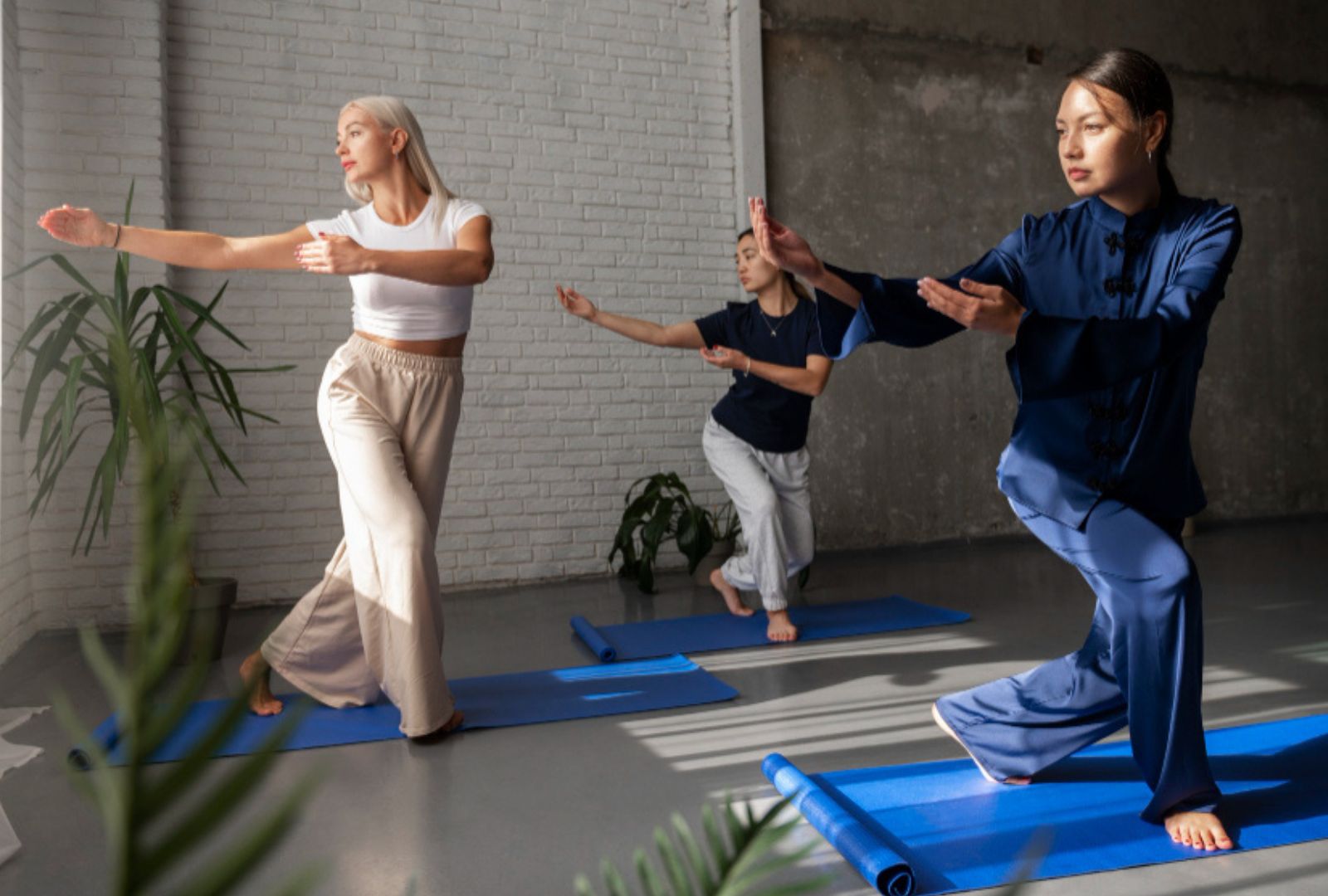
My attitude had shifted radically by the time I returned. Shifu sensed the change and began teaching me different variations of the Squatting Monkey and other Chi Gong practices. I worked myself up to doing two hours of intensive Chi Gong practice a day.
Shifu was a little taken aback when he realized how much I was practicing, but he was truly surprised one day while we were training. Shifu threw a punch. I blocked and countered. He felt not only the physical impact, but a jolt of internal power. He paused and gave me a look.
Not long afterward, I began seeing a Sri Lankan woman I had met on a flight to Colombo. There was intense passion at first, and I found myself commuting back and forth to Sri Lanka.
We also met in Frankfurt, Bangkok, traveled through Laos, then to Chennai, Tiruchirappalli, and Bangalore.
As the months passed, the passionate spell began to wear off. Not only was the intensity fading, but her family was also pressuring her to end the relationship. It all came to an abrupt end the following summer.
At that time, I was absolutely devastated. In hindsight, I can see that my then partner and I were not compatible on many levels. I can also see that much of what I was feeling then, beyond the immediate loss, was stirring up the pain of earlier losses that had been held in my body for a very long time.
Emotionally, it felt like the bottom had fallen out from under me. I was in a very dark and painful space, grieving the loss and not feeling motivated to do much of anything. My work had slowed down, largely because I had been spending so much time outside the United States, and I didn’t feel I had it in me to reach new people.
During those months, I spent a great deal of time breathing with my awareness centered in the depths of the sadness, grief, and other painful emotions that arose. Prolonged grief can be especially hard on the body, and at times it felt like it was dragging on indefinitely. There were moments when I found myself contracting around the loss and all the painful emotions it was evoking.
At times I would simply breathe into the depths of the pain I was feeling. Then after a while, I started shifting into my Chi Gong practice. What I soon began to notice was that working with Chi Gong helped me draw the chi, or life force, into my body. It was calming, energizing, and helped restore a sense of balance. I would often feel lighter afterward.
Combining these two approaches, breathing into the emotions as they arose and then alternating with Chi Gong practice, noticeably accelerated my healing.
In October of that year, when I returned to the Wichita Mountains for the vision quest, and again the following spring, I could feel an extraordinarily powerful presence working within my body, helping me digest the loss. Not only did I feel lighter, I could also sense that I had grown from the experience.
Another thing I discovered as I continued doing intensive Chi Gong practice is that it was helping me develop a more magnetic presence. I noticed that people were more drawn to me, and it seemed to help romantically as well.
While Chi Gong comes from Chinese traditions, many cultures developed practices that work with breath, awareness, and life force. The languages and frameworks differ, but the human body and its internal organs and systems are the same.
Modern science has shown that what appears solid is not as solid as it seems at a deeper level. In the ancient Chinese worldview, practitioners of the internal arts understood that the world around us and within us is alive with subtle forces.
Through breath, posture, and intention, one learns to draw in and cultivate this life force, what they call chi, and to guide it through the body’s internal pathways. Those who train seriously in these disciplines don’t experience this as theory, but as something tangible and lived in their own bodies.
These practices support the functioning of the various organs and contribute to overall vitality. Some practices can also increase sexual energy and drive.
Intensive daily practice is a vital part of the ancient spiritual traditions in which I’ve trained. There is a vast body of Chi Gong practices used for healing, health and vitality, spiritual development, and martial training. Martial artists, in particular, use specific Chi Gong practices to cultivate extraordinary internal power.
Chi Gong can be a critically important practice to incorporate, whether you’re in the midst of a breakup, divorce, being ghosted, struggling with attachment wounds or patterns of abandonment, or simply dealing with the flakiness and other craziness of modern dating. It can help you stay more grounded and keep things lighter.
I do want to offer a few essential cautions. Start off gradually. I’ve seen people do too much too soon while holding a lot of unprocessed emotion in their bodies, and it can precipitate the emergence of more emotion than they’re ready to handle, which can feel overwhelming.
Also, for thousands of years, many people have tried to use spiritual practices to bypass their suffering. It’s important to understand that Chi Gong, while incredibly valuable, is not a substitute for doing the deep emotional processing your healing requires.
That deeper process is something I describe in many of my articles and videos, acknowledging what is happening in your life, noticing what you feel in response to it, and breathing softly and deeply while fully immersing your awareness in the feelings and bodily sensations that arise. Allow the process to take whatever time it needs, following the feelings and sensations as they go through their progression.
You still need to do the emotional work. At the same time, incorporating Chi Gong, as I mentioned earlier, can support and even accelerate your recovery and growth.
In addition to the individual healing sessions I offer, I also teach Chi Gong to those who feel drawn to this kind of practice. If you’d like to explore this work with me, you’re welcome to message or call me at (332) 333-5155.
©Copyright 2026 Ben Oofana. All Rights Reserved.


Leave A Comment